



































Compute Infrastructure Enters a New Phase: How FundeAI Builds an Industrial AI Compute System
As Large Models Accelerate into Industrial Applications, Compute Power Is Becoming the Critical Foundation for Industrial Intelligence
Since 2026, policy and industry signals around compute infrastructure have been intensifying:
-
In March, the 15th Five‑Year Plan officially called for accelerating the construction of a national integrated computing network.
-
That same month, the Government Work Report for the first time proposed new infrastructure projects such as ultra‑large AI computing clusters.
-
In April, the computing network was formally included in the national “six strategic infrastructure networks.”
-
In June, the National Development and Reform Commission made it clear that the 15th Five‑Year Plan period would promote the “coordination of three networks” – computing network, new‑generation power grid, and next‑generation communication network.
-
In August, planning for the new power system further addressed the synergy between computing and electricity.
Together, these developments point to a clear trend: competition in AI infrastructure is shifting beyond sheer scale and peak performance to include resource utilization, network transmission efficiency, task scheduling capability, supply stability, and security & reliability.
In response to the demands of industrial AI capability building, FundeAI has established a “Four Pillars” framework centered on compute, algorithms, data, and security. Compute, as the first pillar, serves as the foundational carrier for running intelligent capabilities and enabling industrial scenario deployment. Based on this understanding, FundeAI has developed a three‑layer compute infrastructure roadmap that covers resource provisioning, unified scheduling, and industry‑oriented delivery.
FundeAI’s compute strategy is not simply about expanding hardware scale, but about organizing heterogeneous compute, model capabilities, and industry scenarios into a schedulable, measurable, and sustainably deliverable production system.
The Changing Landscape of Compute Competition
As industrial AI evolves, the demands on compute are becoming more specific. Different businesses have different requirements for model size, response speed, data security, and cost; training and inference also have distinct resource characteristics. Compute infrastructure must allocate resources flexibly according to task types and convert underlying capabilities into services that upper‑layer applications can directly invoke.
What industry customers truly care about when using AI is whether a task can be completed reliably, whether responses are timely, and whether costs are under control. Compute scale remains important, but resource utilization, task delivery efficiency, system stability, and security are now collectively determining the real‑world value of compute infrastructure.
This also puts new demands on the form of compute services. Servers and compute‑hour rentals provide basic resources, but resource scheduling, model adaptation, service metering, and operational maintenance determine whether these resources can be transformed into foundational capabilities that businesses can call on‑demand and use continuously.
This shift is the fundamental premise for understanding FundeAI’s compute system. Based on a systematic view of efficiency, FundeAI starts with diverse compute resources, builds unified scheduling and standardized services upward, and then delivers compute into specific scenarios through its industrial AI platform. The focus extends from individual devices and nodes to the entire delivery chain, forming a three‑layer compute architecture around resources, organization, and industry application.
From Resources to Organization to Delivery: FundeAI’s Three‑Layer Compute Architecture
Addressing three core questions – “Where does compute come from? How is it efficiently scheduled? How does it enter real business?” – FundeAI’s compute system is structured in three layers.
Bottom layer: Diverse, adaptable compute resources.
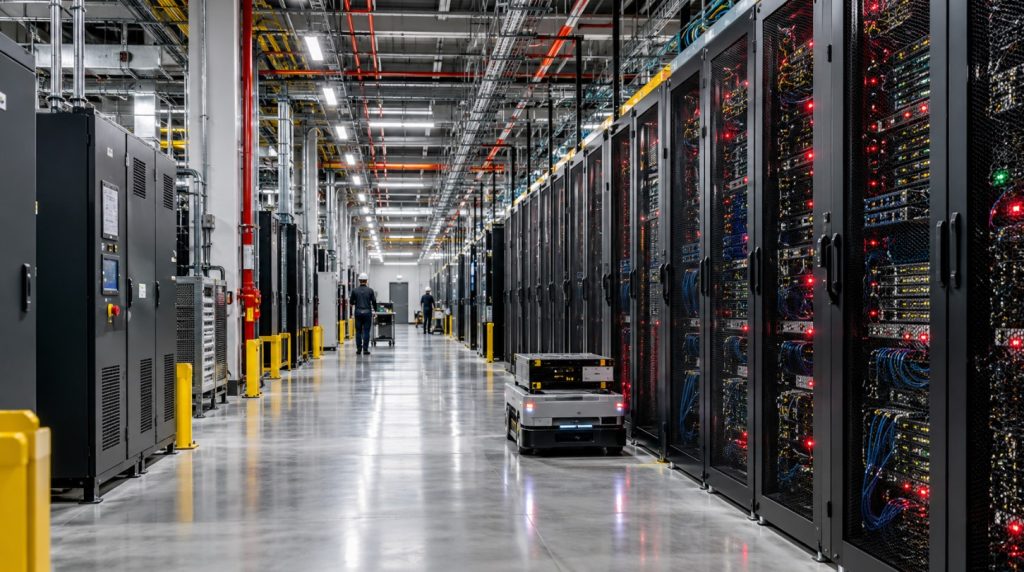
Industrial AI scenarios vary widely, so compute resources cannot be monolithic. Different models, tasks, and business contexts impose different requirements on performance, cost structure, stability, and security boundaries. Thus, the compute foundation must be capable of multi‑faceted adaptation, enabling flexible organization across technology paths, resource types, and business needs.
At the same time, a diversified resource mix helps mitigate risks from single‑technology‑path or single‑supplier dependencies, and allows for flexible configuration based on regional resource costs and business demands.
During the construction of its compute capabilities, FundeAI has also strengthened the connection between infrastructure and applications through industry collaboration. In July 2026, SoftPower and FundeAI signed a strategic cooperation agreement to work together on compute services and Token Factory development, forming a more complete commercial loop from underlying compute to upper‑layer industrial applications.
Middle layer: Organizational capabilities that turn distributed compute into standardized services.
Compute scale alone does not create business value. The key lies in unified management, flexible scheduling, and efficient invocation. The Token Factory service model offers one approach: converting underlying compute resources into standardized, measurable, schedulable service interfaces, transforming compute from static assets into operable capabilities.
At this layer, capabilities such as unified scheduling, task distribution, service metering, and cost control are critical. Resource pooling and service standardization help improve compute utilization and task delivery efficiency, and enable upper‑layer businesses to invoke compute in a more stable and transparent way.
Top layer: Directly facing industry scenarios, addressing how AI capabilities are delivered.
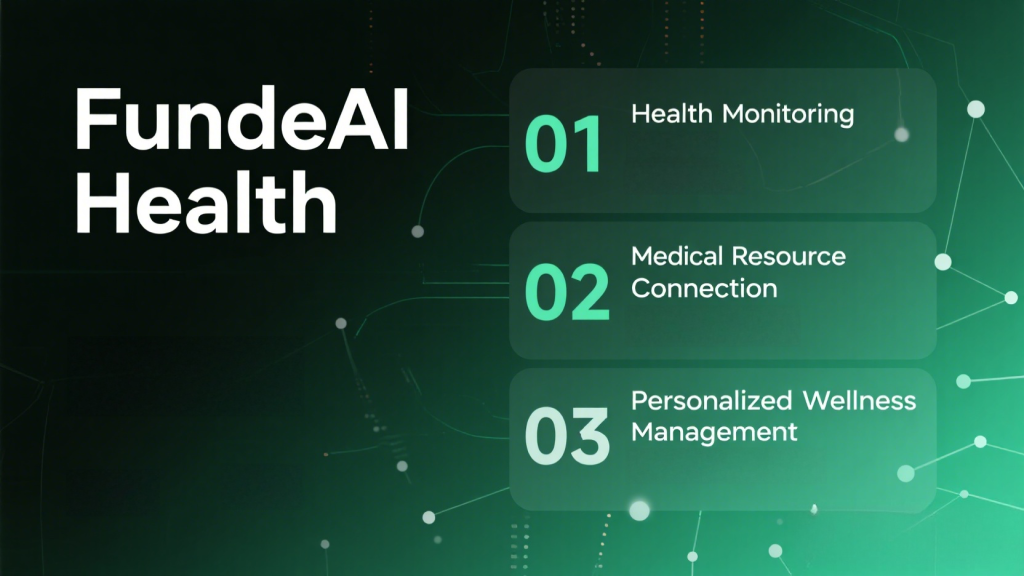
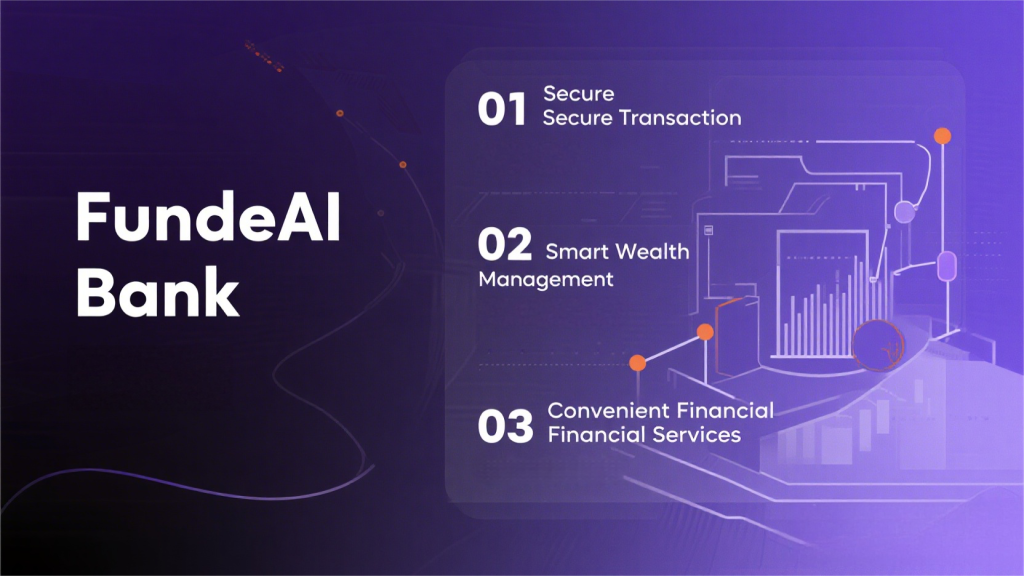
Industrial AI must ultimately operate in real production environments. Sectors such as banking, insurance, energy, mining, agriculture, real estate, and healthcare all have clear requirements for stability, cost, security, and compliance. Compute can only become a business‑usable intelligent service when combined with specific business processes, domain knowledge, and data governance.
Within FundeAI’s top layer, the “DeZhi” AI Platform handles multi‑model access, routing, evaluation, orchestration, and fine‑tuning; the “DeZhen” Dynamic Ontology Platform organizes industry knowledge, business rules, and scenario relationships, helping general models understand specific operations. After this transformation, compute enters knowledge bases, agents, and business workflows, delivering intelligent services that customers can directly use.

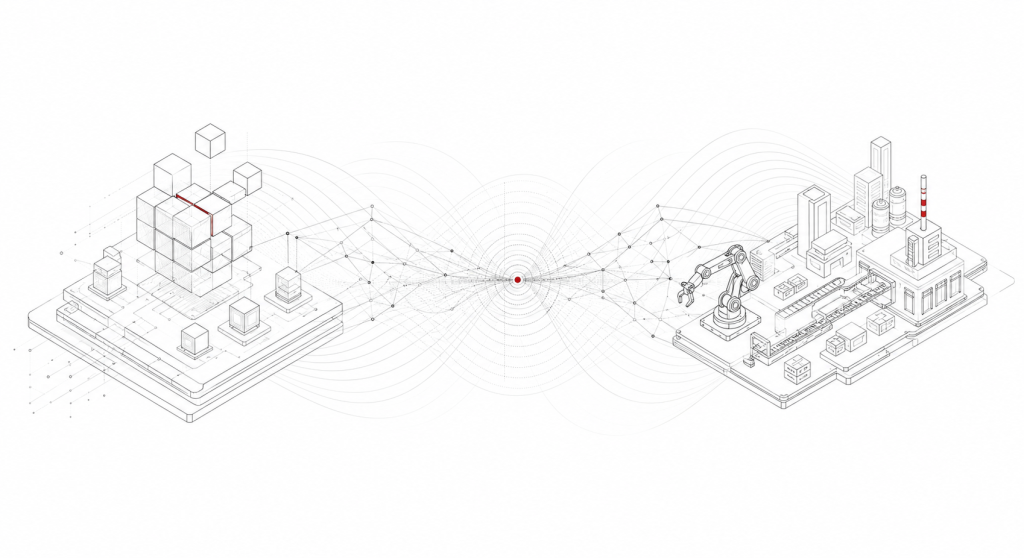
FundeAI Compute System Three‑Layer Architecture
From resource adaptation to service‑orchestrated organization and then to industrial AI platform delivery, FundeAI’s understanding of the compute foundation can be summarized as: Resources are the foundation, scheduling is the hub, and industry delivery is the value gateway.
Synergy Across the “Four Pillars” Enhances the Industrial Value of Compute
In practice, compute efficiency is also affected by algorithms, data, and security. With the same resource input, whether the model is appropriately chosen, whether data is readily usable, and whether security boundaries are clearly defined can all significantly change the final outcome.
Therefore, FundeAI coordinates these four capabilities within a single architecture.
-
Algorithms determine how compute is utilized. The “DeZhi” platform, through multi‑model routing, evaluation, and task orchestration, matches different business needs with suitable models and inference strategies, reducing waste from “one large model fits all.” Scenario‑specific fine‑tuning and lightweight deployment help balance performance, response speed, and cost.
-
Data determines what compute can produce. Industrial AI requires high‑quality, well‑structured, and governable industry data as its foundation. The more mature the data governance, modeling, and analytics capabilities, the more compute can reduce ineffective consumption and redundant computation, and faster translate into verifiable business insights.
-
Security determines whether compute outputs can enter core business processes. Industrial AI involves multiple risks around data permissions, model invocation, content generation, and execution. The Dedun AI Data Security Platform provides systematic protection, establishing boundaries for compliant use of models and data, so that intelligent capabilities can operate in a trusted, controllable, and traceable manner within production environments.

Synergy among Compute, Algorithms, Data, and Security
The synergy among compute, algorithms, data, and security – compute provides the carrier, algorithms optimize invocation, data determines quality, and security ensures safe deployment. Only when all four work together can the technical output per unit of compute be converted into commercial output per unit of compute. The energy and cost constraints arising from compute‑power coordination are precisely a test of the overall efficiency of the “Four Pillars” architecture.
This is also why FundeAI emphasizes the industrial AI approach: general‑purpose large models continue to raise the ceiling of intelligent capabilities, but industrial AI needs to figure out how to actually put these capabilities to work within clear business objectives, cost boundaries, and security requirements. The two are not substitutes but rather a relationship of capability supply and industrial transformation.
Consequently, FundeAI does not define its technical value by parameter count, but by the actual results in real scenarios – whether business processes are shortened, decision quality improved, costs lowered, and sustainable, replicable intelligent services formed.
From “Owning Compute” to “Using Compute Well”
The sustained growth in compute demand is pushing infrastructure efficiency to the forefront. Power availability, energy costs, and resource scheduling capabilities will increasingly and directly affect the delivery capacity and business models of AI services. For industrial AI, compute development must proceed in parallel with models, data, scenarios, and security capabilities, ultimately landing on stable, controllable business delivery.
FundeAI is committed to building a systematic capability chain for industrial AI: the bottom layer needs diverse, adaptable compute resources as a foundation; the middle layer requires service‑oriented and unified scheduling capabilities; the upper layer relies on platforms like “DeZhi” and “DeZhen” to connect models with business, while Dedun secures the boundaries of data and application security.
Going forward, FundeAI will continue to expand its diverse compute resources and node layout to improve supply stability and adaptability. At the same time, it will further strengthen scheduling, metering, model routing, and scenario delivery, so that compute investment can be converted into industrial value faster and more effectively.
FundeAI’s goal is to become the most efficient compute organizer in the industrial AI space – turning heterogeneous resources, model capabilities, and industry scenarios into schedulable, measurable, and deliverable production systems, making the acquisition of intelligent capabilities more stable, controllable, and predictable.
From “owning compute” to “using compute well,” from individual resources to system‑wide efficiency – this is both the industrial challenge posed by the changing logic of compute competition and the long‑term direction of FundeAI’s construction of industrial AI infrastructure.