


































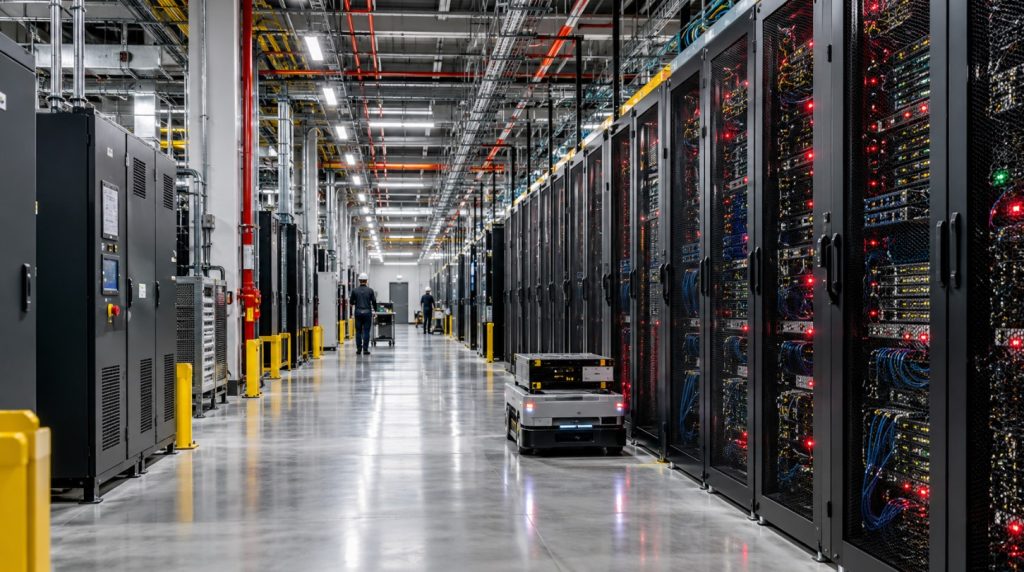



If you are paying attention to the new frontier of artificial intelligence, you may have noticed these scenarios:
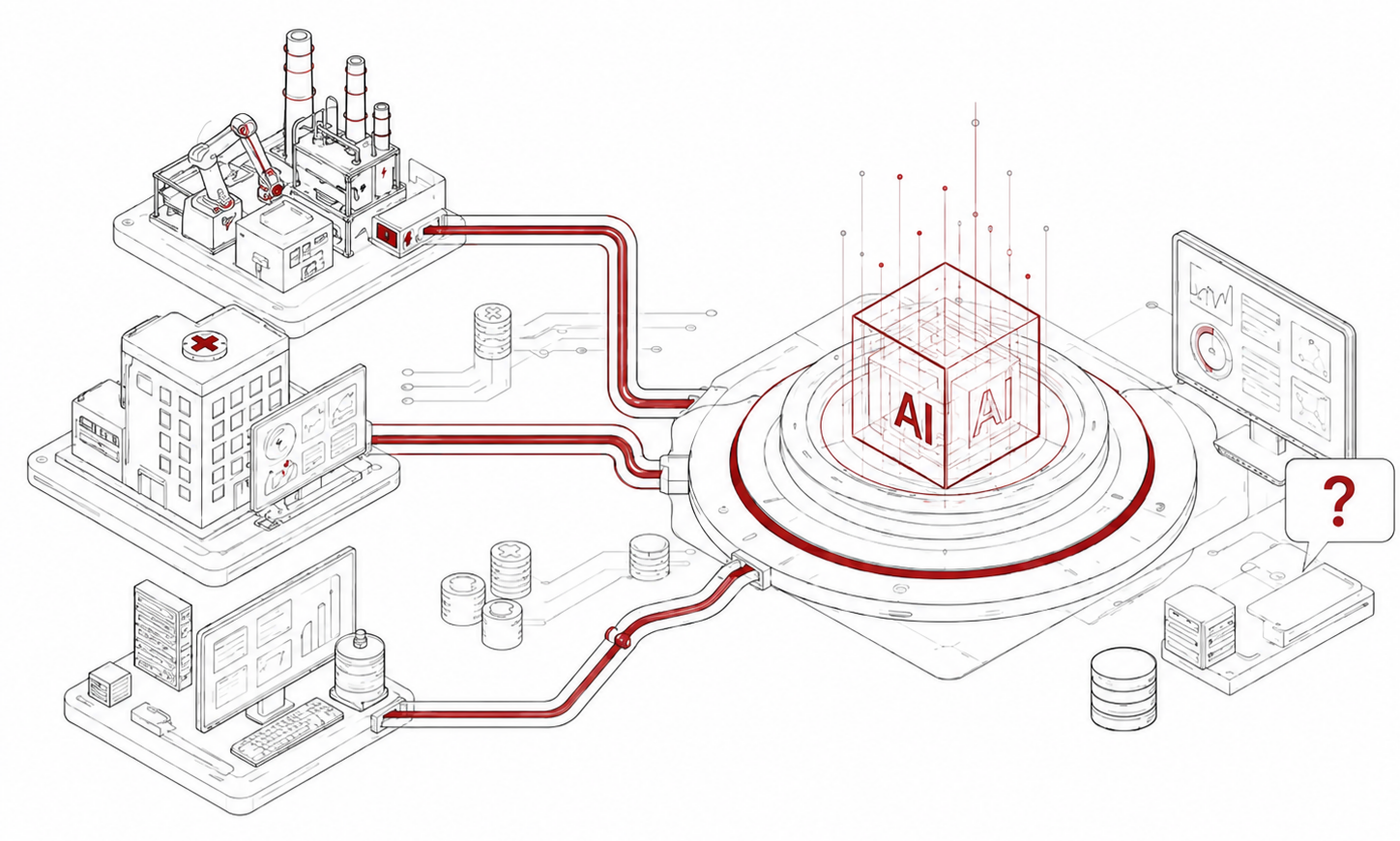
A factory where all equipment is connected, generating terabytes of data every day.
A hospital with servers overflowing with electronic medical records and imaging data.
A company that has been running its ERP and CRM systems for a decade, with a complete set of reporting frameworks.
As the AI boom continues to heat up, managers are rushing to plug in large language models, hoping to use AI to analyze equipment failures, assist in diagnosis, or assess business risks. Yet the answers they get are often generic conclusions, or analyses that cannot support concrete decisions. The result tends to be a lot of sound and fury, but very little real value.
Is the problem not enough data? Clearly not.
The real issue is that this data was created from the ground up for people. A human can read reports, look up records, and understand business context based on experience. For AI, that shared understanding doesn’t exist — it needs to be cultivated. What AI requires is not just data, but data that is comprehensible, interconnected, and capable of being reasoned with and invoked.
Enterprises are investing in large models but not getting a proportional return. The ROI simply isn’t there.
This dilemma is gradually drawing attention at the policy level.
On June 8, the Implementation Plan for Promoting the Construction of High-quality Industry Datasets was issued, explicitly proposing for the first time at the policy level the need to build high-quality datasets that meet the “AI-Ready” standard.
In the two weeks that followed, expert analyses, thematic discussions, and signed articles followed in rapid succession: an expert interpretation on June 18 pointed out that the limits of a model’s capability are essentially determined by data quality, and that large models are moving from “sounding good” to “getting things done”; the “Data Lecture Hall” on June 17 featured industry high-quality datasets and vertical domain model applications as a special topic, covering practices in humanoid robotics, non-ferrous metals, and other industries; and on June 23, Liu Liehong, head of the National Data Administration, published an article in People’s Daily further proposing that wherever the “AI+” initiative advances, the construction of high-quality datasets must follow.
The signal is unmistakable: the threshold for industrial intelligence is shifting forward — from “do you have data?” to “can the data be understood and used by AI?”
This brings a critical question to the surface: Why has AI-ready data become the very first barrier for industrial intelligence?
The significance of this wave of policy signals, led by the National Data Administration, does not lie in the act of “building datasets” itself. Its true watershed meaning is that it forcefully pivots the industry’s focus from “data resource aggregation” to “data quality, model compatibility, and industrial application.”
As the expert analysis highlighted, the boundaries of a model’s capabilities are essentially determined by data quality. Large models are transitioning from “sounding good” to “getting things done,” and without deep nourishment from industry-specific data, it is extremely difficult for models to reach the core business logic of diverse sectors.
This means that the massive data accumulations enterprises once took pride in may turn out to be nothing more than dormant “data fossils” if they fail to meet the standards required by AI.
This is precisely why many enterprises have connected large models and deployed AI agents, yet their effectiveness remains stuck at shallow interactions and never touches real business decisions. It is not that the models aren’t smart enough; it’s that the data being fed to them was never “ready” in the first place.
So, where exactly is the gap between “having data” and “having usable data” getting stuck?
What Exactly Makes Data “AI-Ready”?
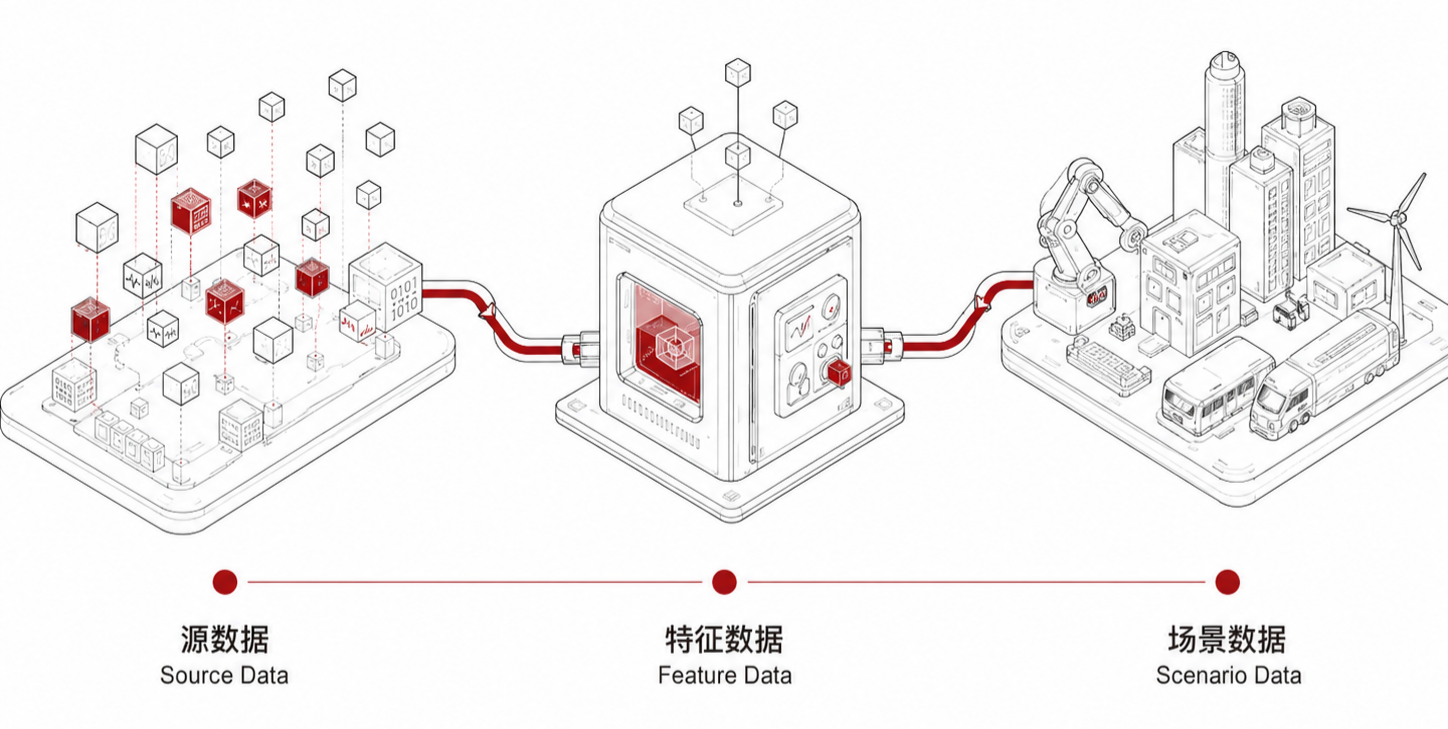
The path from source data to scenario data
Step 3: Value release — enabling data to support closed-loop business operations.
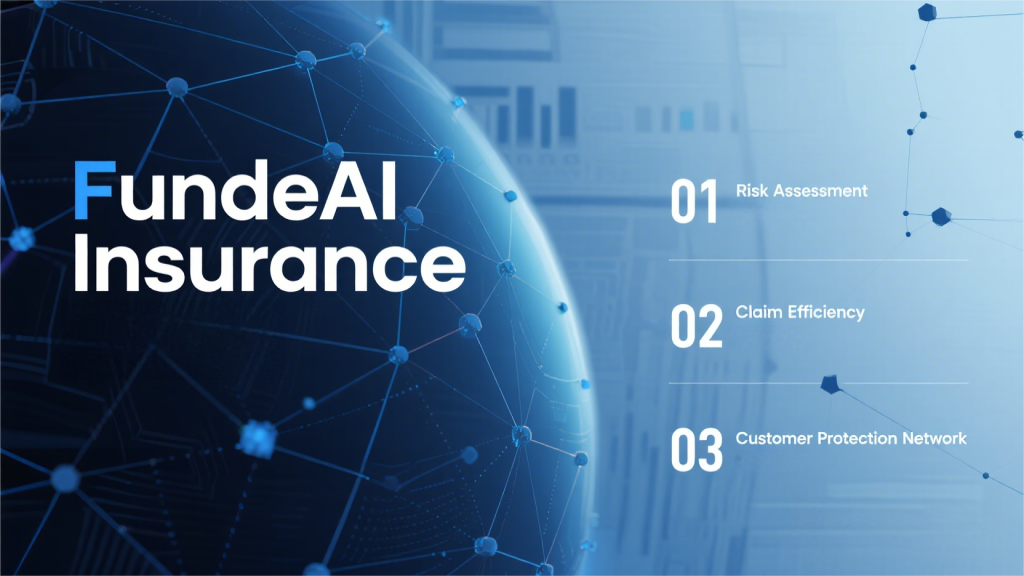
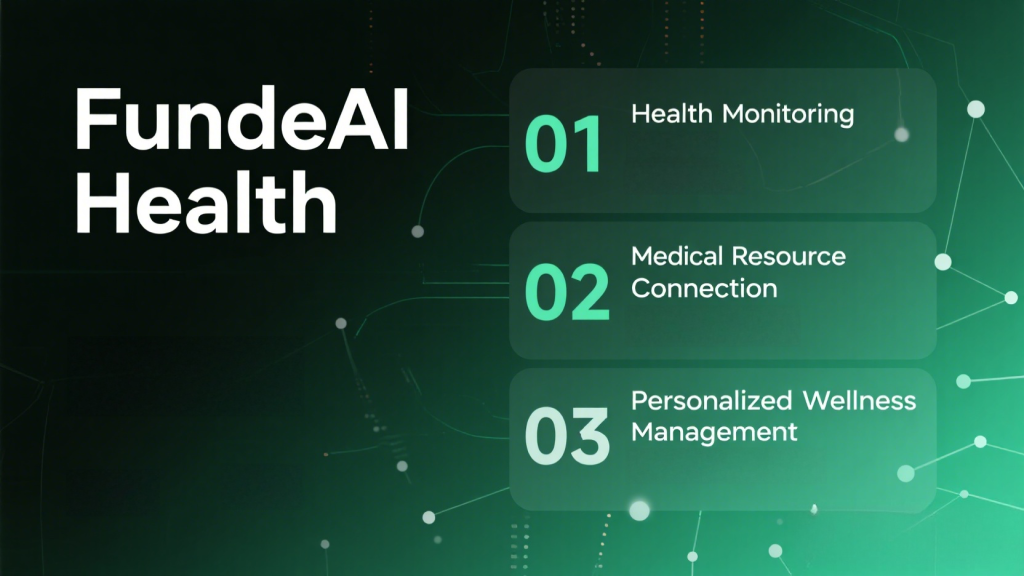
High-quality datasets must ultimately return to concrete industrial scenarios for validation. Tailored to various scenarios such as health, energy, and enterprise risk management, FundeAI further transforms feature data into scenario-specific data that supports business decisions, intelligent judgments, and data-intelligent applications. The quality of a dataset is measured not only by technical metrics but also by its ability to be invoked and validated in real business environments and to continuously generate value. This step answers the need for “data closable-loop operation”: Industrial AI requires not just offline training sets, but living data that can continuously operate, receive feedback, and optimize within business processes.
Therefore, FundeAI’s understanding of high-quality datasets can be summarized as a clear path: connecting multi-source data through data aggregation; precipitating reusable data capabilities through dynamic ontology and algorithmic power; and then releasing value through a closed-loop industrial ecosystem — transforming data from static records into an industrial intelligence foundation that is comprehensible, reasonable, and capable of closed-loop operation.
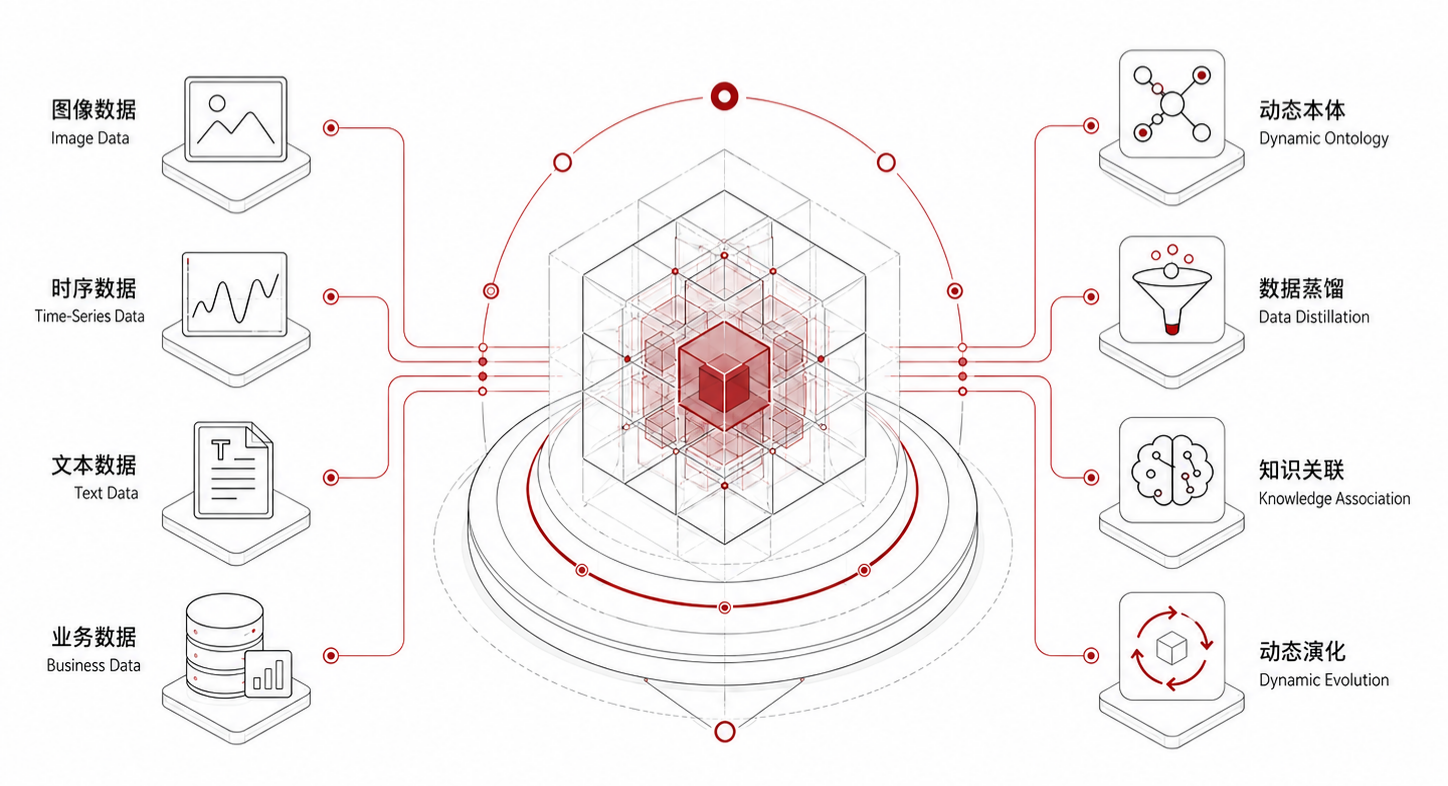
Dynamic ontology and algorithmic capability precipitation
FundeAI: Turning Business Data into an AI-Ready Industrial Intelligence Foundation
Faced with the structural requirements of AI-ready data, enterprises need a complete set of capabilities to transform years of accumulated data resources into a foundation that AI can understand, invoke, and continuously optimize — rather than merely plugging AI into their systems.
As an enabler of foundational industrial intelligence capabilities, FundeAI has accumulated relevant practices across multiple industrial scenarios:
At the underlying structure level, the Dezhen Dynamic Ontology Platform helps enterprises organize business objects, rule relationships, process logic, and scenario knowledge, so that data shifts from scattered fields and tables into a business network that AI can comprehend and reason with. This layer of work essentially builds the structural and semantic layers for AI-ready data.
In the energy scenario, Deyao Smart Energy Saving connects multi-dimensional relationships among equipment status, space utilization, operational strategies, and time-based changes, allowing energy consumption data to evolve from mere “recorded values” into operational logic that AI can participate in analyzing and optimizing.
In the enterprise risk management scenario, Demingdeng integrates multi-source business information and builds entity relationship networks, giving scattered financial, public opinion, and industry data a traceable and verifiable basis for judgment, thereby supporting AI-assisted corporate due diligence and risk assessment.
……
From Dezhen to Deyao and Demingdeng, it is evident that FundeAI’s understanding of AI-ready data goes far beyond data governance itself. It targets the complete transformation process towards industrial intelligence: first, build business semantics and rule relationships through Dezhen, providing data with a structural foundation that AI can understand; then, in concrete scenarios such as health, energy, and enterprise risk management, combine data with standards, processes, strategies, and judgment logic, enabling it to truly enter the operational flow of models, AI agents, and business systems.
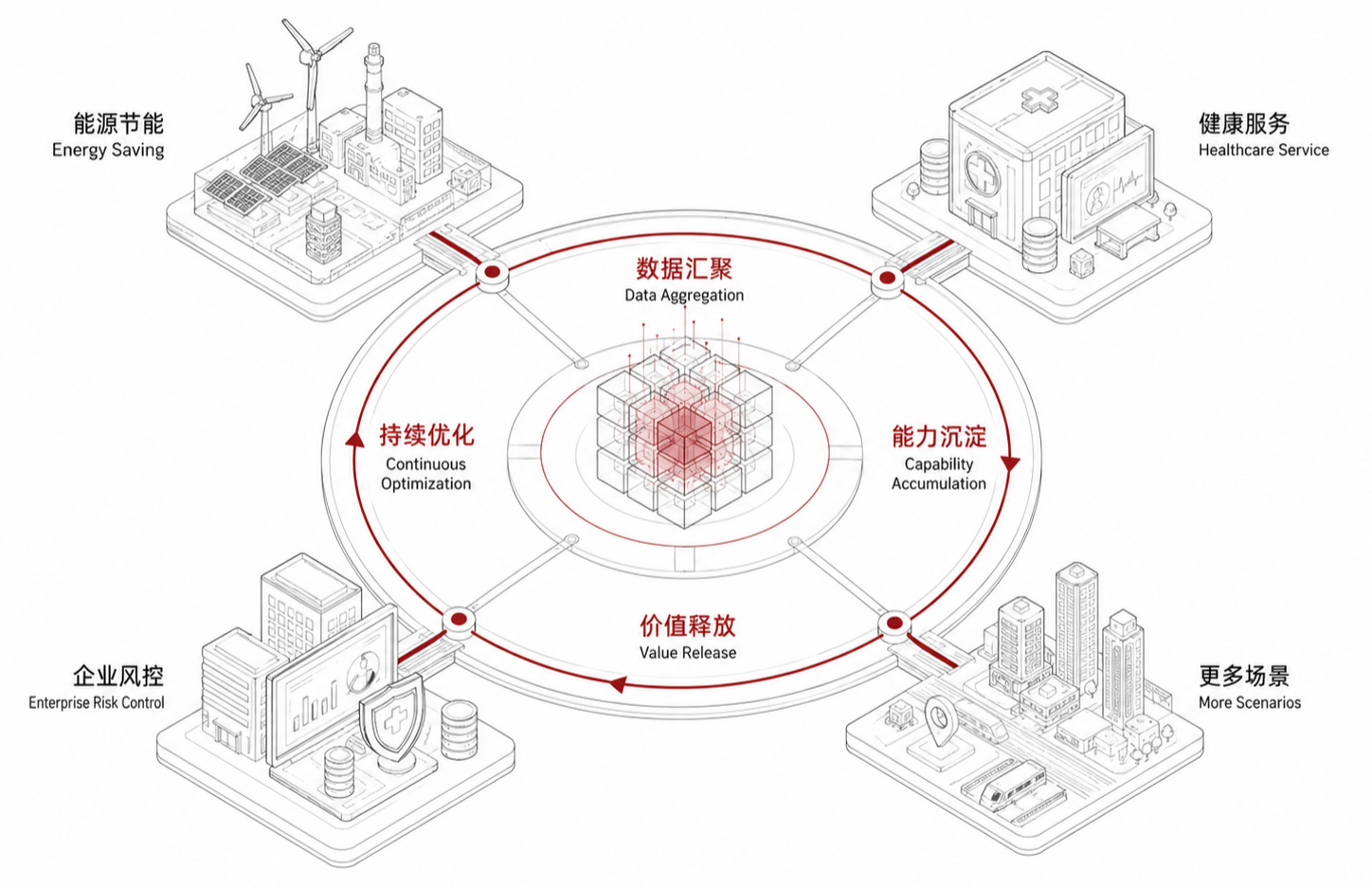
Continuous closed-loop in industrial scenarios
All of these practices point toward a single goal: ensuring data no longer stops at “aggregation” and “storage,” but instead, through dynamic ontology, algorithmic capability, and a closed-loop industrial ecosystem, is sedimented into reusable data capabilities that continuously release value in real business scenarios.
The National Data Administration’s emphasis on high-quality industry datasets is essentially driving an infrastructure upgrade for industrial intelligence. When policy clearly points towards AI-ready, the data question in industrial competition is no longer “who has more data?” but rather “whose data can be understood, invoked, validated, and continuously optimized by AI?”
For enterprises, transforming the data resources accumulated in their business systems into AI-ready data as early as possible is not about meeting some technical standard — it is about paving the way for genuine industrial intelligence.
The threshold has shifted forward. But those who cross it will be the first to see the road ahead.
FundeAI is committed to becoming a provider of digital economy infrastructure and an enabler of industrial intelligence development.
With “Artificial Intelligence + Dynamic Ontology” as its technological foundation and “algorithms, computing power, data, and security” as its core, FundeAI serves multiple industries including financial insurance, energy and chemicals, health management, and smart government. Starting from frontier scenarios, we transform technology into tangible business results, empowering risk management, efficiency improvement, and intelligent decision-making.
We believe that the value of digital intelligence lies in solving the complex problems of the real world.