






























2026: The True Watershed of Digital Intelligence Competition
In 2026, at a critical juncture in the deep implementation of China’s 15th Five-Year Plan, the digital economy is transitioning from a phase of rapid expansion to one of high-quality advancement. With the revised Cybersecurity Law coming into force, the comprehensive rollout of the “AI+” initiative, and the accelerated construction of a national integrated data market, the underlying logic of digital intelligence competition is undergoing a fundamental transformation.
Yet, enterprises are encountering a shared bottleneck in their digital transformation journeys: while technological tools have become increasingly sophisticated and data accumulation has reached unprecedented levels, the anticipated disruptive value has yet to fully materialize. Gains from incremental efficiency improvements are approaching their ceiling, and data and business “silos” remain pervasive. This reality compels a critical question: when the dividends of technology adoption fade, what will power the next wave of competition?
We believe that 2026 marks the true watershed of China’s industrial digital intelligence competition—a decisive shift from data-driven operations to ecosystem-level intelligent collaboration.

In essence, 2026 represents the turning point from extensive expansion to precision-driven refinement. This watershed is fundamentally about an elevation in the dimension of competition. Leading enterprises will no longer focus solely on using data to optimize internal operations; instead, they will strive to build and operate intelligent systems capable of real-time perception, intelligent interpretation, and proactive optimization of entire ecosystem networks.
The competitive focus is shifting—from the volume of data owned to the ability to orchestrate ecosystem relationships; from automating internal processes to enabling cross-organizational and cross-business intelligent collaboration.
Watershed One: From Tool Enablement to Agent-Driven Intelligence
In the first half of the digital intelligence race, competition centered on whether enterprises had adopted technology—cloud migration, AI applications, or data platforms. By 2026, the decisive question becomes how well these technologies are integrated: whether they form a full-stack system, evolve from assistive tools into autonomous intelligent agents, and rest on a self-controllable technological foundation. This is the first critical watershed.
The 15th Five-Year Plan explicitly calls for “strengthening the efficient supply of computing power, algorithms, and data” and for “breakthroughs in foundational AI theories and core technologies.” This directly addresses a core pain point of past transformations: enterprises often pursued technology stacking—purchasing computing power, introducing models, building platforms—only to create new “technology silos.” As a result, computing resource utilization often remains below 30%, algorithms are disconnected from business realities, and data circulation is severely constrained.
By 2026, the defining hallmark of technological competition will be the large-scale deployment of AI agents. According to Gartner, by 2026, 40% of enterprise applications will embed task-oriented AI agents, up from less than 5% in 2025. These agents are no longer passive, question-and-answer tools; they are digital employees capable of goal planning, cross-system coordination, and autonomous execution.
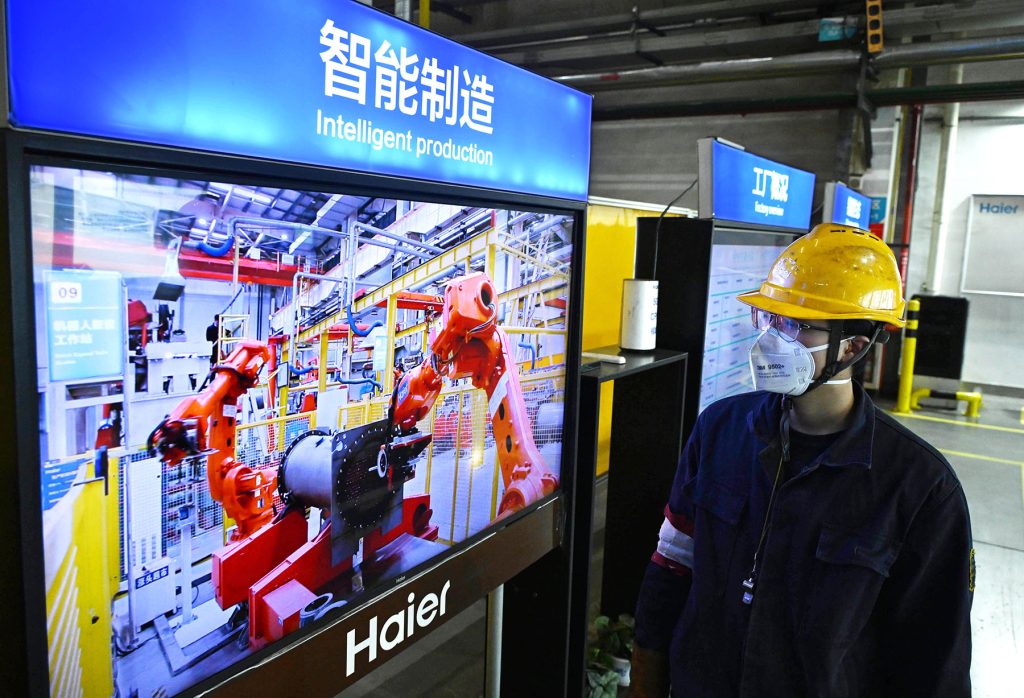
For example, in advanced manufacturing, industry leaders are correlating product quality data and equipment performance data with upstream raw material characteristics and downstream usage environments. This not only enables predictive maintenance, but also feeds back into product design and generates process optimization recommendations for suppliers. Data is no longer a static asset—it becomes a dynamic production factor that circulates and appreciates within ecosystem networks.
This ability to achieve full-stack technological integration defines the 2026 technology watershed. Competitive advantage no longer comes from excelling in a single technology, but from the coordinated orchestration of technologies deeply coupled with real business scenarios. Enterprises must either build such capabilities or partner with service providers who possess them—otherwise, they risk being excluded from the second half of digital intelligence competition.
Watershed Two: From Preset Responses to Adaptive Strategic Gaming
Traditional data-driven decision-making relies largely on models trained on historical patterns to respond to known or foreseeable scenarios. However, within complex ecosystem networks, change is real-time, multidimensional, and interdependent. A fluctuation in a partner’s orders, a new regulatory policy, or a supply chain disruption can all trigger cascading effects.
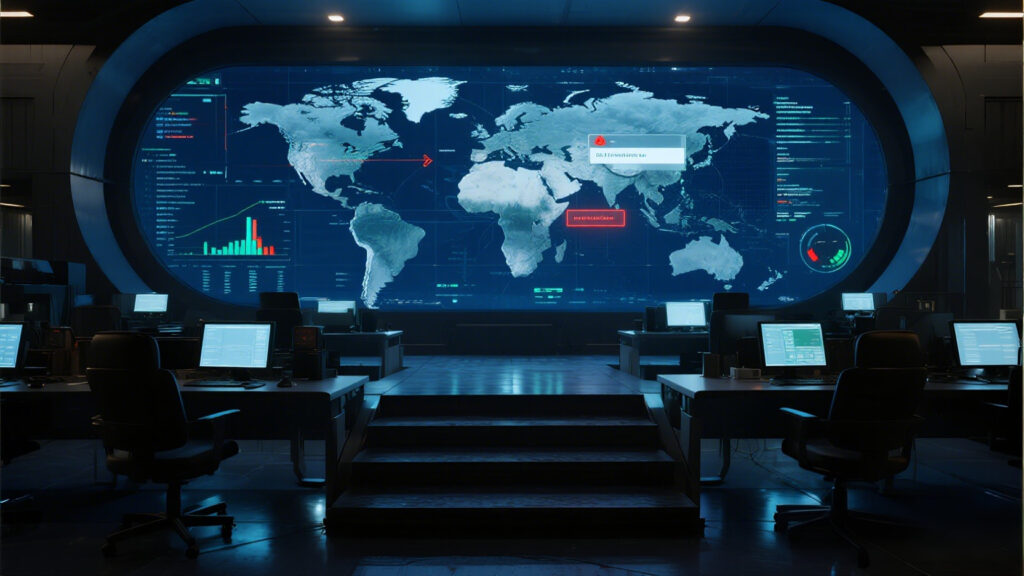
Decision intelligence beyond the watershed must therefore support real-time dynamic simulation and multi-agent collaboration. It functions as a digital ecosystem command center, leveraging technologies such as dynamic ontology modeling to continuously map and interpret the intricate relationships among entities—enterprises, products, logistics, and capital—across the industrial chain.
When a disturbance occurs at any node, the system can instantly simulate multiple propagation paths and outcomes, providing near-real-time strategic options for cross-enterprise coordination in production, inventory allocation, and risk hedging. Decision objectives shift from optimizing individual costs to maximizing overall system resilience or optimizing network-wide efficiency.
Watershed Three: From Internal Cost Reduction to Network Value Creation
This watershed represents the most visible commercial transformation. Once ecosystem-level intelligent collaboration is achieved, the logic of value creation fundamentally changes. Value no longer comes solely from reducing internal operating costs, but from activating, optimizing, and even restructuring entire ecosystem networks, and participating in the distribution of the incremental value generated.
This manifests in two primary ways.
First, the incubation of cross-domain integrated products and services. For example, data collaboration between insurance and health management can enable dynamically priced health protection plans; the fusion of property services and community finance insights can produce lifestyle-based wealth management solutions.
Second, enterprises can platformize and service-enable internally validated intelligent capabilities, empowering SMEs across the ecosystem. Supply chain risk early-warning models or production scheduling optimization algorithms can be packaged as SaaS offerings, enhancing stability and efficiency across the entire industrial chain. In this context, enterprises evolve from competitors into ecosystem organizers and value distributors, with their core competitiveness defined by the ability to cultivate a prosperous, win-win intelligent ecosystem.
Crossing the Watershed
Ultimately, the 2026 digital intelligence watershed is a competition in new-quality productive forces. The core logic is shifting—from technology-driven to value-driven, from isolated enterprise efforts to ecosystem-wide collaboration, and from speed-first to a balanced emphasis on security and development.
To cross this watershed, enterprises must focus on three strategic priorities:
-
Building full-stack technological capabilities, enabling the coordinated advancement of computing power, algorithms, data, and security;
-
Embedding within industrial ecosystems, connecting upstream and downstream data chains to unlock deep integration between the digital and real economies;
-
Upholding security and compliance as foundational principles, embedding regulatory requirements into end-to-end business processes to enable compliant data value realization.
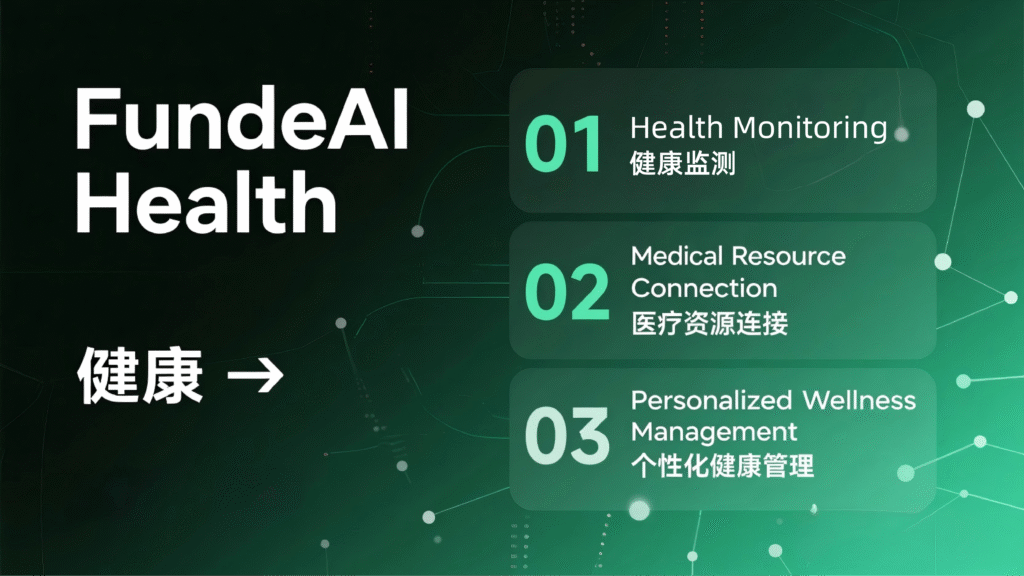
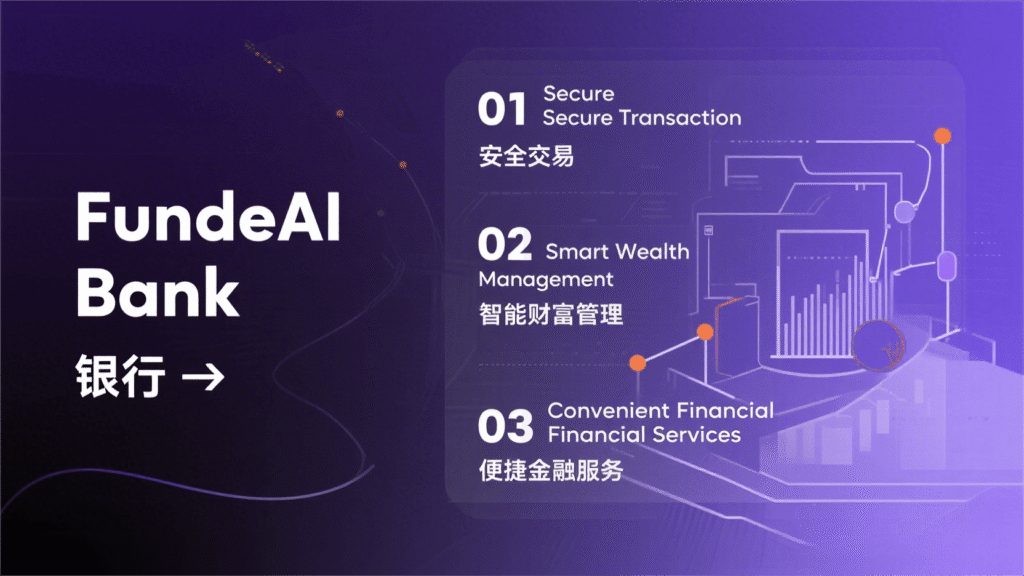
As a builder of digital economy infrastructure and an enabler of industrial intelligence, FundeAI’s technological and ecosystem practices exemplify this transformation.
Leveraging eight core technology foundations and ten product lines, FundeAI adopts a dual-track computing strategy combining NVIDIA and domestically developed solutions, balancing frontier exploration with autonomous control. Its algorithms are powered by the Dezhi foundation model and Dezhen dynamic ontology technology, enabling deep correlation analysis across multi-source heterogeneous data. Data integration is achieved through the Deyuan data platform, which connects diverse business data across the ecosystem to build an enterprise-wide data lake. Security is safeguarded by the self-developed Dedun endpoint security system, ensuring secure data circulation. Together, these capabilities form a closed-loop system integrating technology, ecosystem, and value, empowering digital intelligence transformation across industries.
Only enterprises that grasp technological trends, build ecosystem-level barriers, and uphold security baselines will stand out in the new competitive landscape and emerge as true winners in the digital economy era.
The future has arrived. The 2026 digital intelligence watershed is both a challenge and an opportunity. Only by embracing change and acting decisively can enterprises seize the initiative—and win the future.